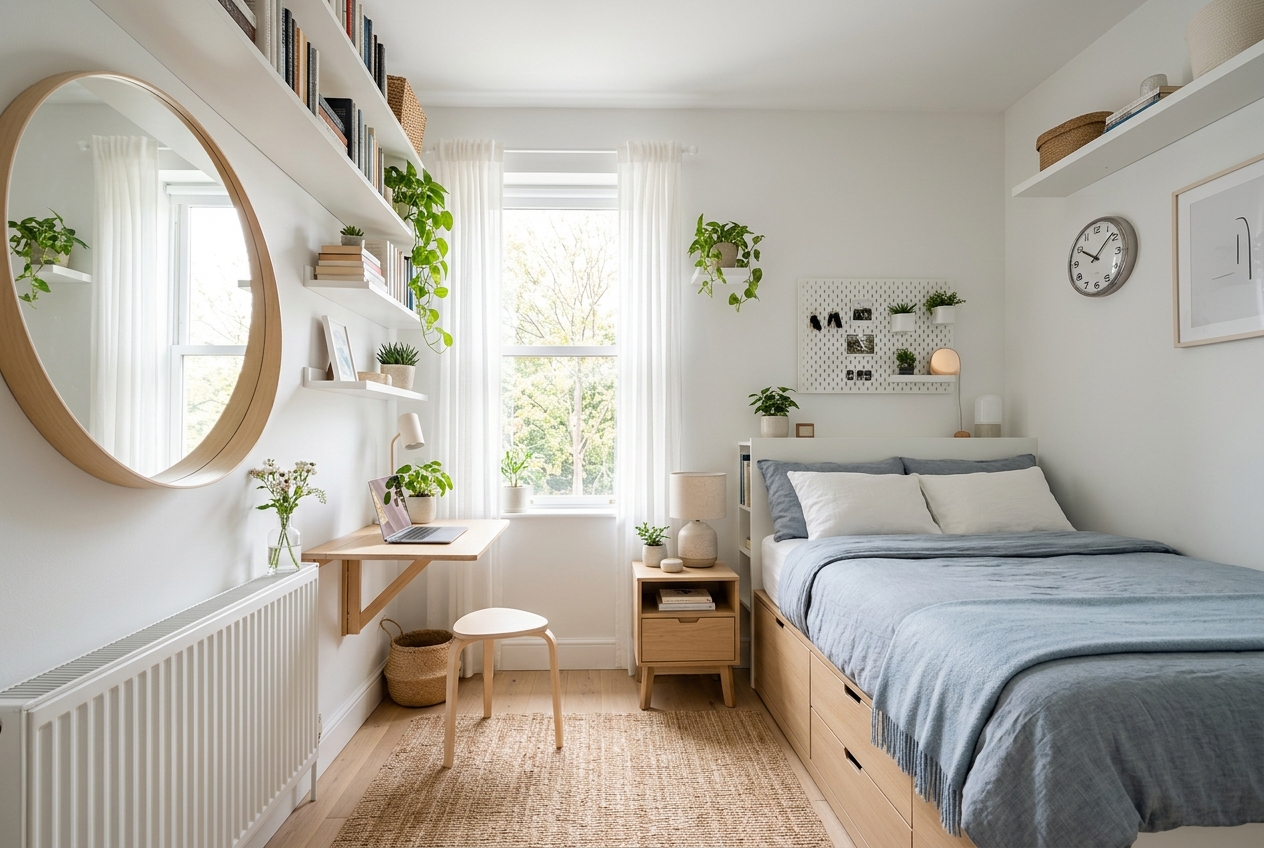
Small-Space / Bedroom
Bedroom Ideas for Small Rooms: Getting the Scale Right When Space Is the Real Constraint
There is a real difference between a "small bedroom" and a genuinely tiny one — a converted office, a box room, or a starter-apartment bedroom sometimes under 90 square feet. Below a certain size, the issue stops being styling and becomes math: a queen bed plus a standard dresser can mathematically fail to leave a walkable floor, and no amount of rearranging fixes that.
Try this in my room — freeUpload a photo of your room · 1 free watermarked preview a month · no account · How AI bedroom design works
The good news is that the decisions that matter here — bed size, furniture depth, where doors actually swing — are ones you make once, usually for free, and everything after gets easier.
The palette
- Soft white
- Powder blue
- Warm oak
- Slate
- Ink
Do the math before you shop: rightsize the bed
Measure the room, subtract at least 24 to 30 inches for a usable walkway on one side and whatever floor the door and closet swings claim, then see what bed size actually fits what is left. A full-size bed at 54 inches wide is often the real ceiling in a genuinely tiny room, even though queen (60 inches) is the default size at every mattress store. Downsizing one bed size is frequently the single highest-impact decision you can make, and it is much easier to decide before delivery than after.
Check where the door and closet actually swing before you place anything
A swing arc is invisible until you draw it out, but it claims real floor: a door swinging fully into a tiny bedroom can take a third of the usable space with it. Sketch the arcs for the door and any closet doors first — that zone is unusable no matter what furniture eventually goes in the room, so it should shape every placement decision that follows it, not be discovered after the fact.
Trade footprint for depth, not width
In a truly tiny room, furniture depth — how far a piece sticks out into the floor — matters more than its width. A narrow-depth dresser at 16 inches versus a standard 20-plus inches reclaims meaningful floor space even at an identical width and against the same wall. Shop by the depth spec on the product page, not by how wide the silhouette looks in a photo.
Consolidate to one purpose per piece, with zero duplicates
A normal small bedroom can support both a closet and a separate dresser; a genuinely tiny one usually cannot support both without eating the walkway. Pick one clothing-storage system and let a single piece do double duty — a bed frame with built-in drawers replacing the dresser outright — rather than layering multiple storage solutions on top of each other.
See it in your own room for free
Upload a photo of your room, pick a style, and compare a redesign made with instructions to keep your room layout. No signup needed.
Redesign my room freeSee how Roomcast redesigns your actual roomOr get Roomcast on iPhone1 free watermarked preview a month. Premium on iPhone: $4.99/week with a 3-day free trial, $6.99/month, or $29.99/year with a 3-day free trial.
FAQ
What size bed fits in a really small bedroom?
Measure your clear floor first — subtract door and closet swing plus at least one 24 to 30 inch walkway — then match what remains to bed dimensions. A full (54 inches) often fits comfortably where a queen (60 inches) leaves no usable floor at all.
How much does door swing actually affect a small bedroom?
A door swinging fully into a genuinely tiny bedroom can claim up to a third of the floor. Sketch the swing arc before placing any furniture, since that area is unusable regardless of what you put in the room around it.
Can I test furniture sizing in my actual small bedroom before buying?
Yes — Roomcast keeps your real room dimensions and windows in the redesign, so you can preview whether a smaller bed or a shallower-depth dresser actually opens up a walkable floor before you buy or return anything.