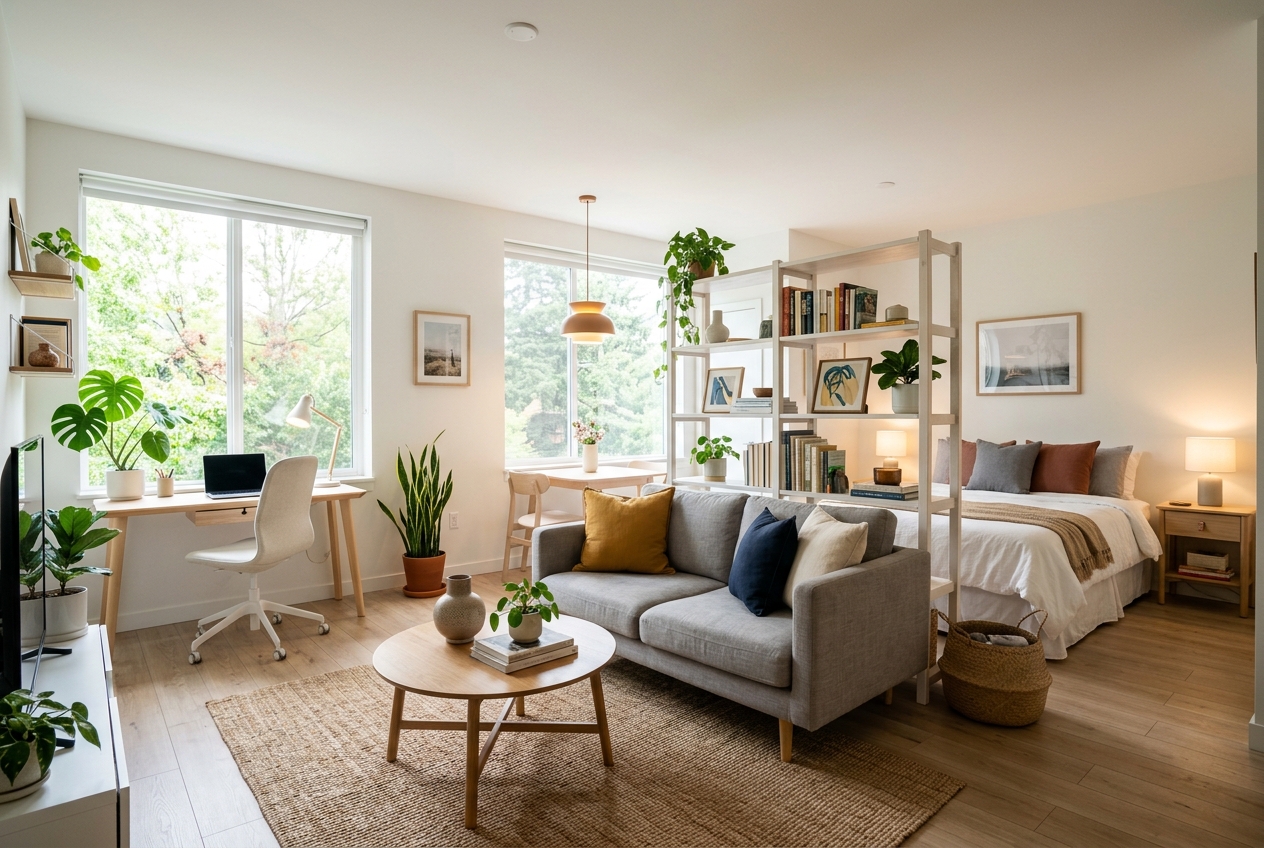
Small-space / Studio apartment
Studio Apartment Ideas: Zoning One Room Into a Home
A studio is not a small one-bedroom — it is one room doing three or four jobs at once. The design problem is zoning: making a single space read as separate areas for sleeping, working, cooking, and relaxing without building walls you are not allowed to build.
Try this in my room — freeUpload a photo of your room · 1 free watermarked preview a month · no account
The best studio layouts solve this with furniture placement, rugs, and light rather than construction. All of it is reversible, which matters when you are renting.
The palette
- Soft white
- Warm grey
- Pale oak
- Muted sage
- Charcoal accent
Zone with rugs and furniture backs
The cheapest way to divide a studio is to define areas with rugs and the backs of furniture. A rug under the bed and a different rug under the sofa tell the eye "these are two rooms." Floating a sofa with its back to the bed creates an invisible wall between the sleeping and living zones without blocking light.
Keep one consistent palette
Small spaces feel bigger when the palette is tight. Pick one light base color and two accents and repeat them across every zone. Contrast comes from texture and one darker accent, not from many colors — a busy palette makes a studio feel smaller and more chaotic.
Use vertical space and dual-purpose pieces
Floor space is the scarce resource, so go up: tall shelving, wall hooks, and a headboard with storage. Dual-purpose furniture — a storage ottoman, a desk that doubles as a nightstand, a bed with drawers — removes the need for extra pieces that would eat the floor.
Let light define the day and night zones
Layered lighting does the zoning at night that furniture does in daytime. A warm lamp by the bed, a task light at the desk, and a floor lamp in the living area let you "turn on" one zone at a time, which makes the single room feel like it has separate spaces.
See it in your own room for free
Upload a photo of your room, pick a style, and compare a redesign made with instructions to keep your room layout. No signup needed.
Redesign my room freeSee how Roomcast redesigns your actual roomOr get Roomcast on iPhone1 free watermarked preview a month. Premium on iPhone: $4.99/week with a 3-day free trial, $6.99/month, or $29.99/year with a 3-day free trial.
FAQ
How do you divide a studio apartment without walls?
Use rugs to mark separate zones, float furniture (like a sofa with its back to the bed) to create invisible dividers, and layer lighting so each area can be lit independently. Open shelving units can also act as a partial partition while still letting light through.
What color should a small studio be?
One light base color — soft white, warm grey, or pale oak tones — repeated across the whole space, with two accents for interest. A tight, consistent palette makes a studio read larger than a room with many competing colors.
Can I preview a studio layout before moving furniture?
Yes — Roomcast redesigns a photo of your actual studio, keeping your real windows and proportions, so you can see a zoned layout applied to your space before you rearrange anything.